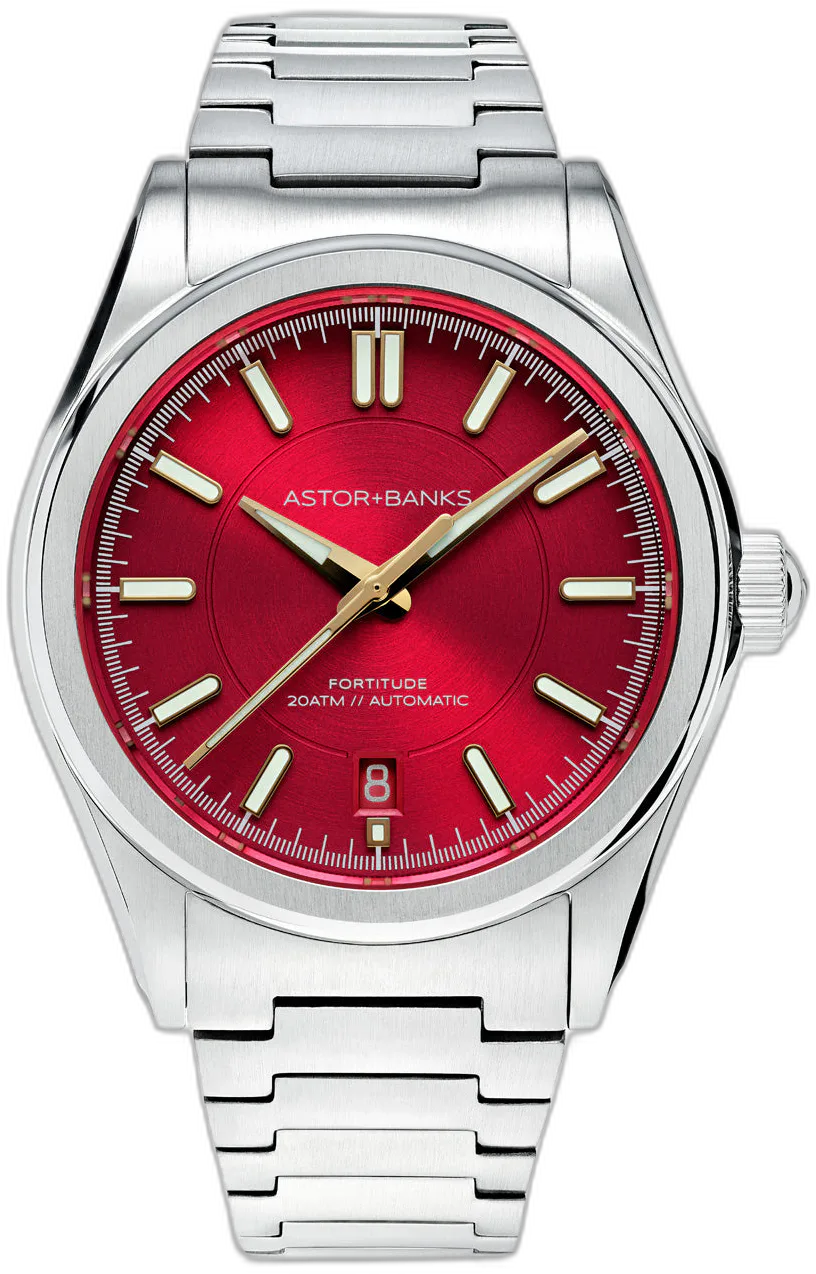
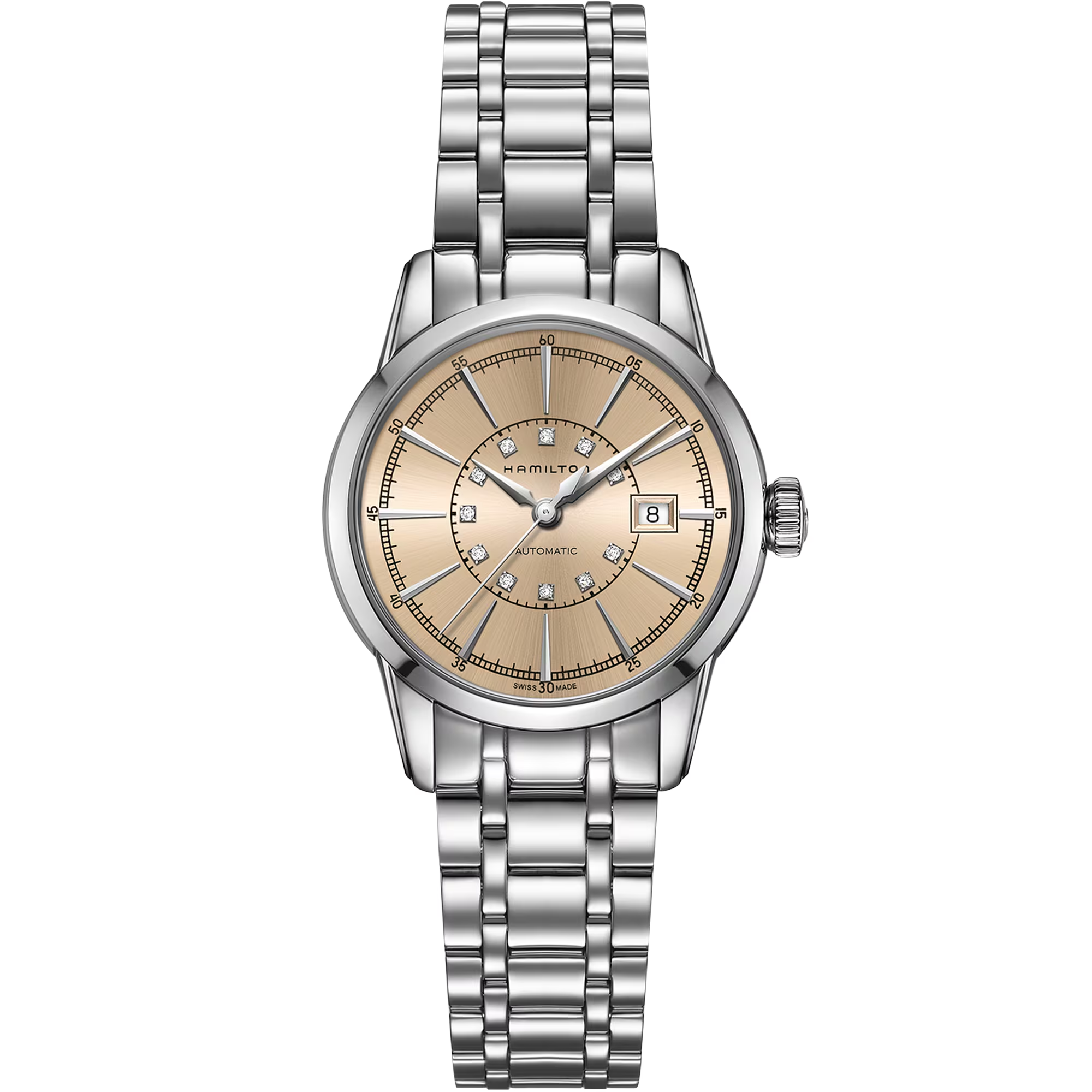
Astor + Banks Fortitude ProvsHamilton American Classic RailRoad Auto
The numbers, the dial colors, the calibers — laid out so you can stop flipping between tabs.
At a glance
11 of 29 specs differFull specifications
Case
7 specsCrystal & Dial
1 specsMovement
2 specsPricing
1 specsFollow this matchup
Get a note when Astor + Banks Fortitude Pro vs Hamilton American Classic RailRoad Auto gets more votes, a community discussion, or a price drop. No account needed.
Owners + reviewers, side by side
Synthesized for each watch independently from owner discussions, enthusiast forums, written reviews, and video reviewers.
Owners and reviewers widely praise the Astor + Banks Fortitude Pro for its scratch-resistant coating, thin and compact 38.5mm case, and versatile dial options. The layered finishing with polished chamfers and comfortable bracelet are frequently highlighted as strong points, contributing to its wearability. One owner notes good timekeeping, while a reviewer states the Miyota 9015 movement is adjusted to +/-10 seconds per day. A potential drawback mentioned is the date numeral appearing in half shadow due to anti-magnetic shielding, and one owner considers the bracelet clasp dated. Overall, owners and reviewers rate the Astor + Banks Fortitude Pro highly for its durable construction and thoughtful design at its price point.
Owners widely praise the Hamilton American Classic RailRoad Auto as a versatile everyday watch, noting its stellar appearance on bracelet or strap and the desirable H-10 movement providing an 80-hour power reserve. The 40mm case, measuring 11.35mm thick with slightly turned-down lugs, contributes to a thinner perceived profile. It is offered for $430 shipped and includes a travel pouch.
More watches worth a look
Matched to the watches above on size, movement, style and price — microbrands first. Open any one to dig in.
People also compared
Comparisons nearby in the catalog — alternatives to the watches above paired against the matchup.