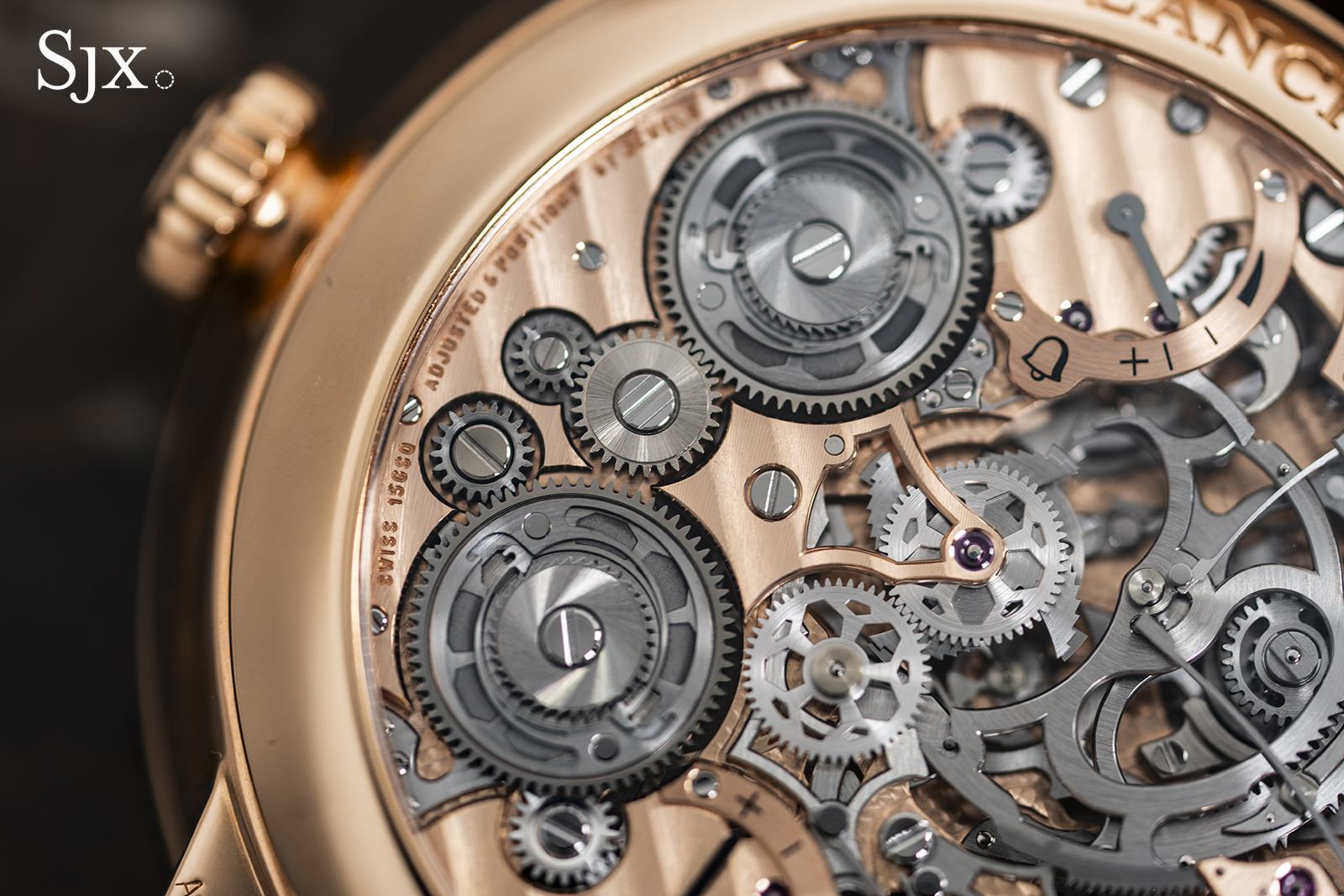
Grande Sonnerie Click Wheels Explained
This article delves into the intricate mechanism of grande sonnerie click wheels, a visual hallmark of high-end chiming watches. It explains how these components allow for the independent winding of two separate mainspring barrels, essential for powering both the timekeeping and striking functions of a grande sonnerie complication.
Grande sonnerie watches often feature highly finished click wheels that are a visual staple of the complication.
The grande sonnerie requires significant power, necessitating a second mainspring barrel isolated from the timekeeping going train to accommodate the different unwinding rates of the striking and timekeeping works.
The double click wheels, a signature of Vallée de Joux watchmaking, enable independent winding of both barrels via a single crown.
The origin of the double click wheel winding mechanism is disputed, with Sylvain Mairet and Louis Audemars often credited, and it appeared around the 1850s.
In a grande sonnerie, the crown's winding position engages both directions to wind different parts of the movement, unlike standard mechanical watches.
The winding train often features two click wheels sharing a crown wheel, with a pinion on the crown stem engaged regardless of rotation direction.
Individual click wheels typically consist of a central ratchet wheel, two symmetric click pieces, and the large click wheel, with the clicks latching onto the ratchet teeth.
In this setup, the click wheel pivots on the mainspring arbour without directly engaging it; instead, the click pieces engage the central ratchet based on the click wheel's rotation direction.