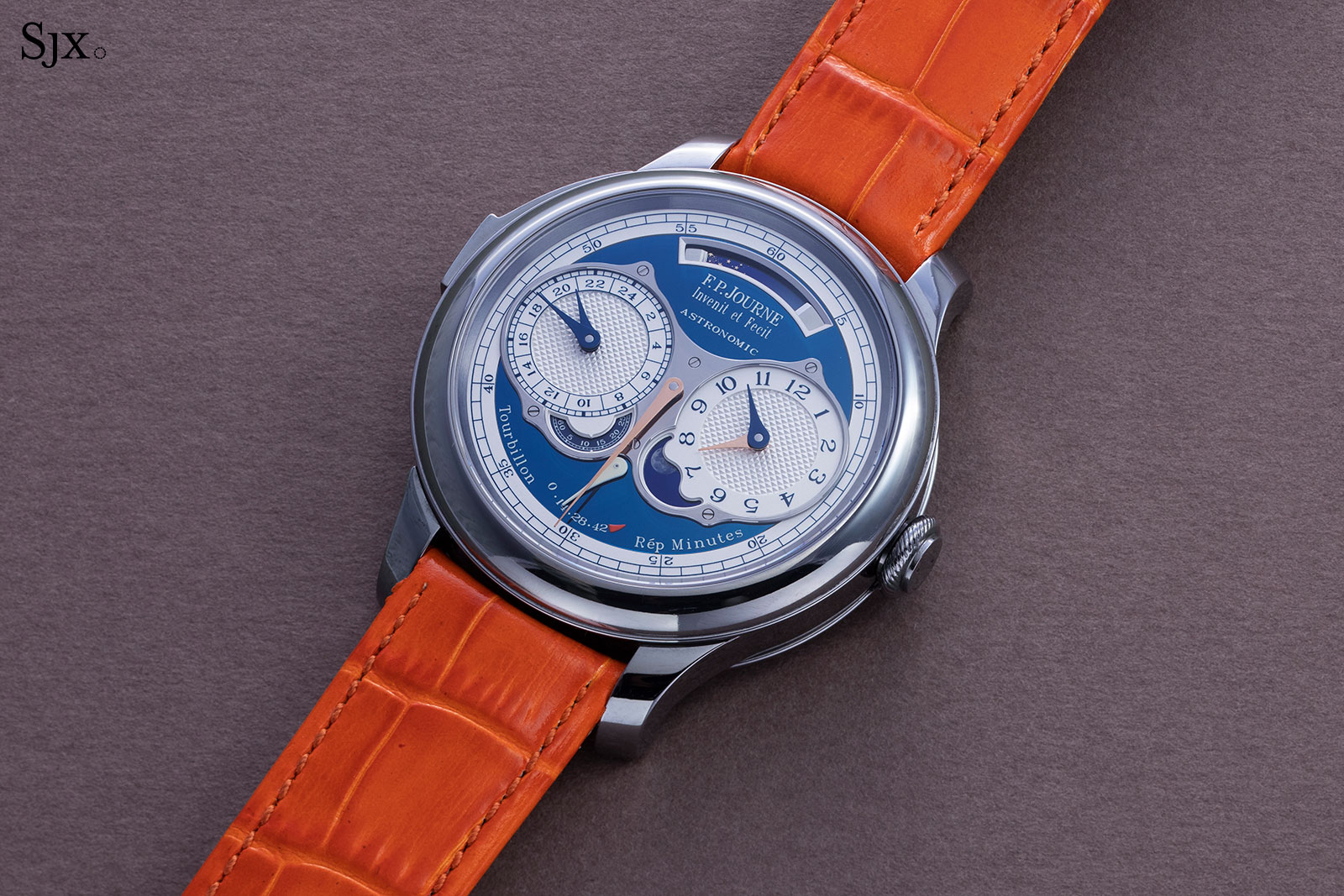
Heavenly Horology: Understanding Astronomical Complications
This article explores the historical and mechanical significance of astronomical complications in horology, tracing their roots from ancient timekeeping to modern watchmaking. It highlights how these complex mechanisms, which reproduce celestial cycles, have long been symbols of status and scientific understanding, challenging traditional hierarchies of watch complications.
Astronomical complications mechanically encode vast celestial cycles into concise visual displays, historically favored by European monarchs and nobles.
The Vacheron Constantin Copernicus Celestial Spheres depicts the elliptical orbit of the Earth around the Sun, functioning as a calendar against the signs of the zodiac.
Many astronomical complications are mechanically simpler than chronographs, despite their profound historical meaning.
The most common astronomical complication is the moon phase, representing the 29.53-day synodic month.
The equation of time (EOT) reveals the difference between mean solar time and solar time indicated by the Sun.
Sidereal time measures the Earth’s rotation relative to distant stars, sometimes displayed as a rotating chart of constellations.
Complications like sunrise, sunset, and day length are location-dependent and require mechanical coding for the observer's position.
The Krayon Anywhere features an adjustable cam for displaying sunrise and sunset, adaptable to different locations with watchmaker adjustment.