Industrial Artisanship and the Paradox of Independence
This article explores the blurring lines between independent and major watch brands by examining artisanal craftsmanship within larger organizations. It proposes an objective measure based on 'watchmaker-hours' to differentiate production approaches, categorizing them into 'artisanal-industrial' (100-299 hours per watch) and 'industrial-haute horlogerie' (30-99 hours per watch). The piece highlights Seiko Epson's Micro Artist Studio as a prime example of a large company dedicating significant resources to small-scale, high-craftsmanship watchmaking.
- Independent watchmaking is increasingly mirrored within major brands.
- An objective measure of watchmaker-hours can differentiate production approaches.
- Seiko Epson's Micro Artist Studio exemplifies artisanal craft within a large organization.
The distinction between independent and major watch brands becomes less clear when considering artisanal watchmaking within industrial brands.
An objective measure of 'watchmaker-hours' aims to compare different production approaches, distinguishing categories like 'artisanal-industrial' (100-299 hours per watch) and 'industrial-haute horlogerie' (30-99 hours per watch).
Seiko Epson's Micro Artist Studio, with about a dozen staff, produces approximately 30 watches per year, a ratio competitive with small-scale independent watchmakers.
The Micro Artist Studio's watchmakers learned finishing techniques from Philippe Dufour, underscoring the independent nature of their methods.
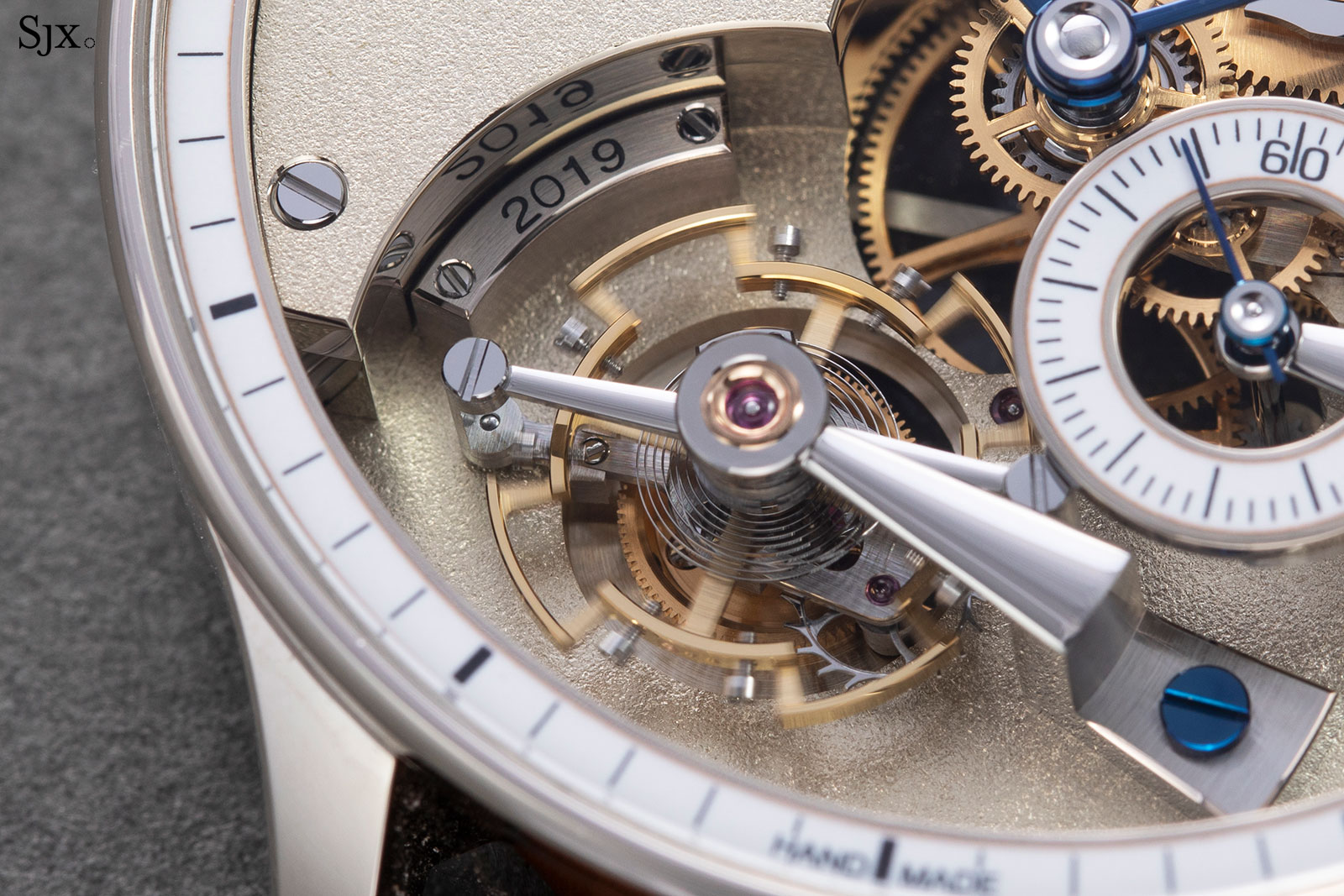
Watches from the Micro Artist Studio, such as the Credor Eichi II, rival independent makers in decoration details like heat-blued steel and mirror-polished anglage.
Greubel Forsey employs around 130 people to produce 200 watches annually, a scale that allows for significant human time investment per watch.