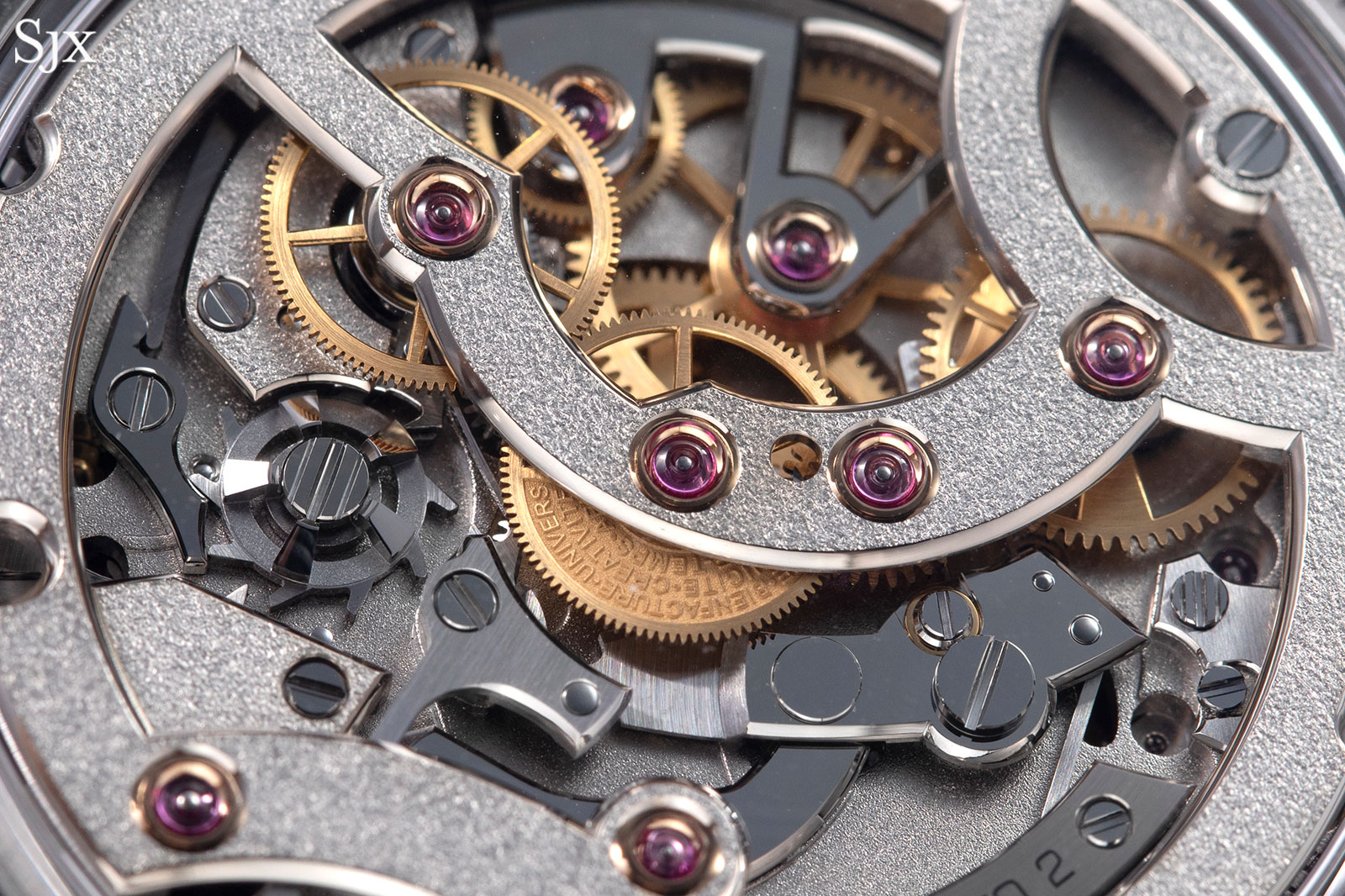
Insight: The Science of Gear Tooth Profiles
This technical series delves into the crucial, often overlooked, science behind gear tooth profiles in watchmaking. It examines the historical evolution and mathematical underpinnings of different gear shapes, highlighting how variations in tooth profiles significantly impact energy transmission efficiency and durability within mechanical movements. The article contrasts the cycloidal and involute profiles, explaining their geometric origins and practical applications in horology.
Gear tooth profiles, though often taken for granted, vary in shape and size, leading to significant implications and calculated trade-offs in energy transmission.
Historically, gear tooth profiles in the 1600s are rumored to have been traced after the thumb's shape, though evidence is scarce.
The development of detached escapements highlighted transmission problems, prompting horologists to focus more on gear efficiency and tooth strength.
Two main ideas behind optimizing tooth engagement are smooth power delivery during meshing for a constant ratio and ensuring individual teeth are strong enough to carry the load.
The cycloid gear profile was suggested by Ole Rømer in 1674 and formally analyzed by Philippe de La Hire in 1694, being the de facto shape in watchmaking for a long time.
The involute tooth profile was formalized in the late 18th century by Leonhard Euler and is now found in the majority of mechanical transmissions.
Both cycloidal and involute profiles are geometric constructs based on the paths of rolling circles; a cycloid is traced by a point on a circle rolling on a flat surface or another circle (epicycloid/hypocycloid), while an involute is traced by a point on a li
Specific constraints for gears in watch movements include low friction (as teeth engagement is dry), large transmission ratios (often 10:1 or 12:1), and smoothness of engagement and motion transfer, further complicated by the need for tight manufacturing toler