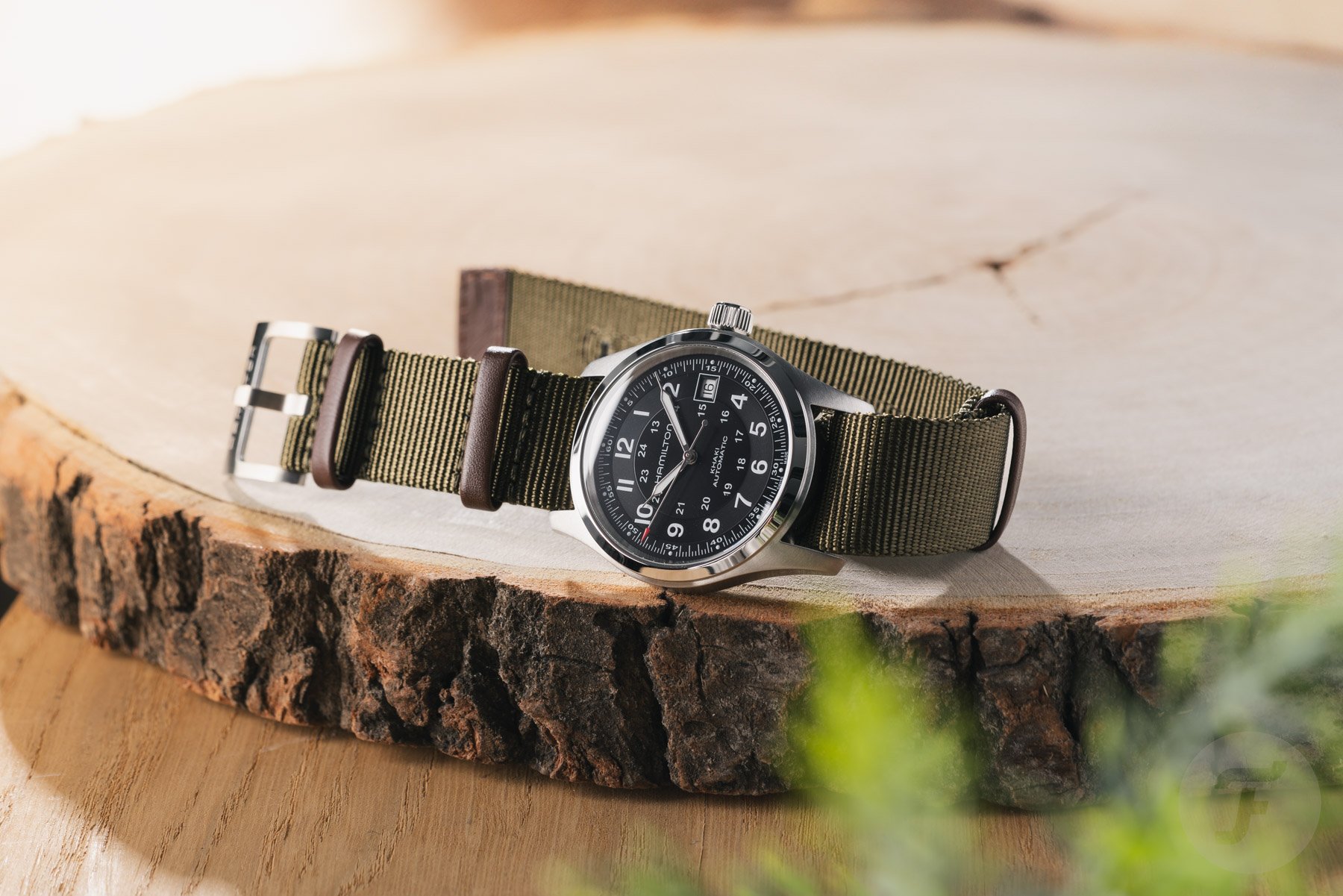
The Simple Pleasures Of Field Watch Design
This article explores the enduring appeal of field watches, emphasizing their design rooted in necessity and function over complexity or fashion. It traces their origins from World War I trench watches to standardized military specifications and highlights how their core principles of legibility, proportion, and robust construction remain relevant in modern watchmaking.
Field watches were originally designed for military use, emerging from the need for soldiers to tell time without fumbling for pocket watches under fire.
Early military specifications, such as those for the British "Dirty Dozen" watches in WWII, called for black dials, luminous Arabic numerals, a railway-track minute scale, and a sub-seconds register.
The IWC Mark XV, mentioned as a personal example, is noted for its 38mm case size and modest lug-to-lug, contributing to its comfortable wearability.
Modern field watches that are considered well-executed include Timor's heritage reissues and modern takes, Hamilton's Khaki Pilot Pioneer Mechanical (a reissue of the W10), and CWC's G10 and W10 models.
The article suggests that simple, affordable quartz watches like the Casio MQ24-7B2 or Timex Weekender can embody the purest spirit of the field watch due to their focus on legibility and utility.
The core appeal of a field watch lies in its unobtrusive nature and its primary function: to tell time reliably and disappear on the wrist.