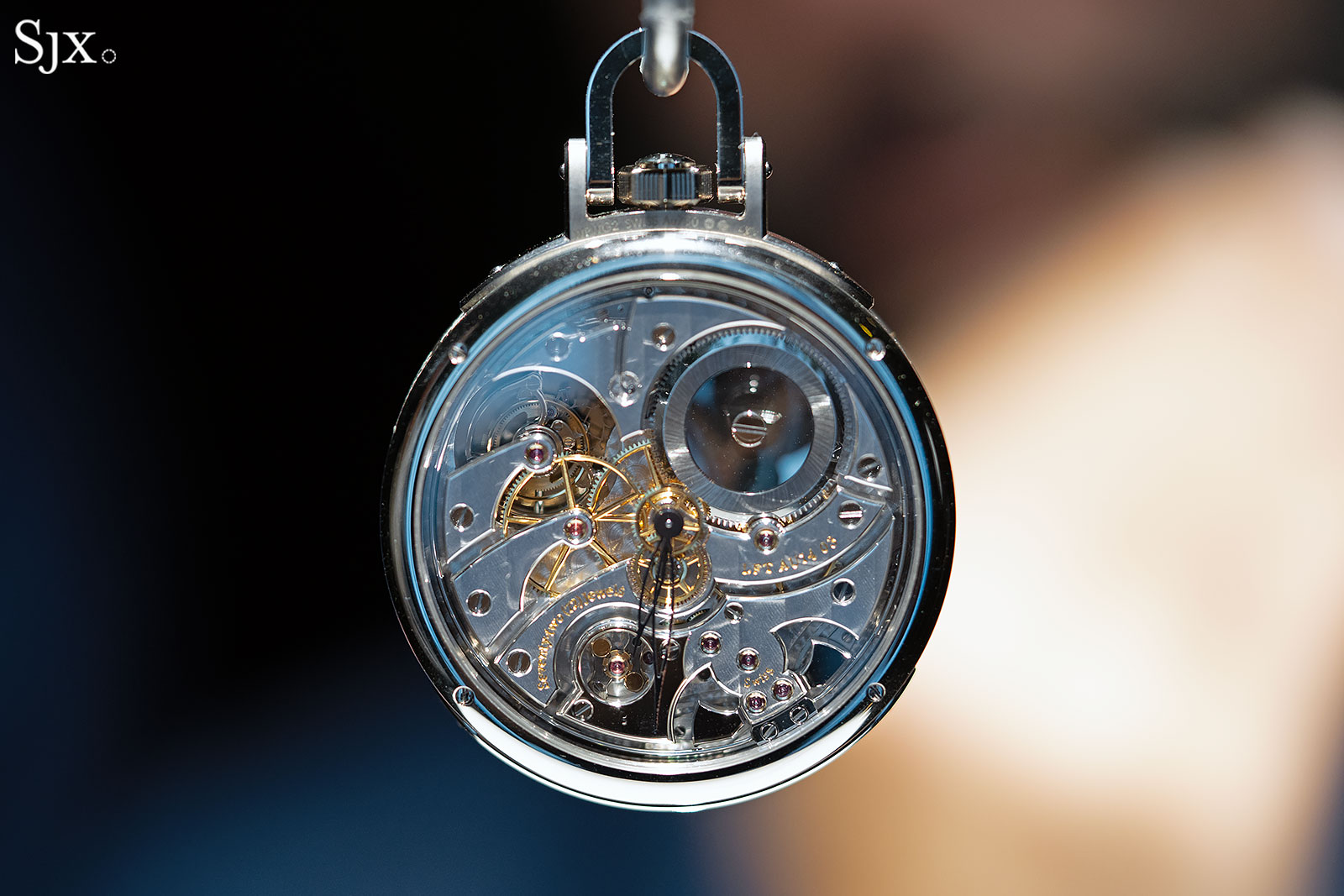
The Rise of the Inverted Movement
A growing trend in watchmaking sees movements 'inverted' within the case, exposing the barrel, gear train, and escapement on the dial side. This format, while not entirely new, is gaining popularity due to factors like the increased importance of movement finishing, the desire for unique and Instagram-worthy watches, and the comparative cost-effectiveness of adapting existing calibers. Brands are increasingly designing movements from the ground up for this exposed aesthetic.
An inverted movement is defined as a movement reversed inside the case, with the barrel(s), gear train, and escapement exposed on the wrist, while the dial, if present, is typically a small, off-centre display.
Some inverted movements are adaptations of conventional calibers, like the Voutilainen 28TI which modified the cal. 28 with an extra train to reverse hand direction.
Other inverted movements, like the cal. 507DR in the Breguet Tradition 7027, pioneered the trend and predated their conventional counterparts.
Brands like Montblanc sometimes conceal the non-essential components behind a closed case back, focusing attention solely on the main visible elements.
Newer, purpose-built movements for the inverted format are designed from scratch and do not require a reversing train for clockwise hand rotation.
The trend is fueled by the importance of movement finishing, amplified by high-resolution photography and social media, and the desire for watches that stand out online.
Adapting existing movements for an inverted format is a relatively low-cost way for brands to introduce new models, especially for those in the middle of the market.
The inverted presentation is argued to be an ideal format for showcasing haute horlogerie calibers and a watchmaker's skills, as seen in highly handcrafted pieces like the Ferdinand Berthoud Naissance d’une Montre 3.