Are Smaller Watches Actually Better In Design And On The Wrist?

This article argues that the watch industry's recent trend towards larger case sizes (40mm+) may be a misstep, advocating for a return to smaller, more traditionally proportioned watches in the 34-38mm range. It highlights several models from Rolex, Tudor, and IWC that demonstrate how smaller cases can offer superior wearability and design balance without compromising functionality or modern specifications.
- Watches in the 34–38mm range are argued to be better designed and wear better on the wrist.
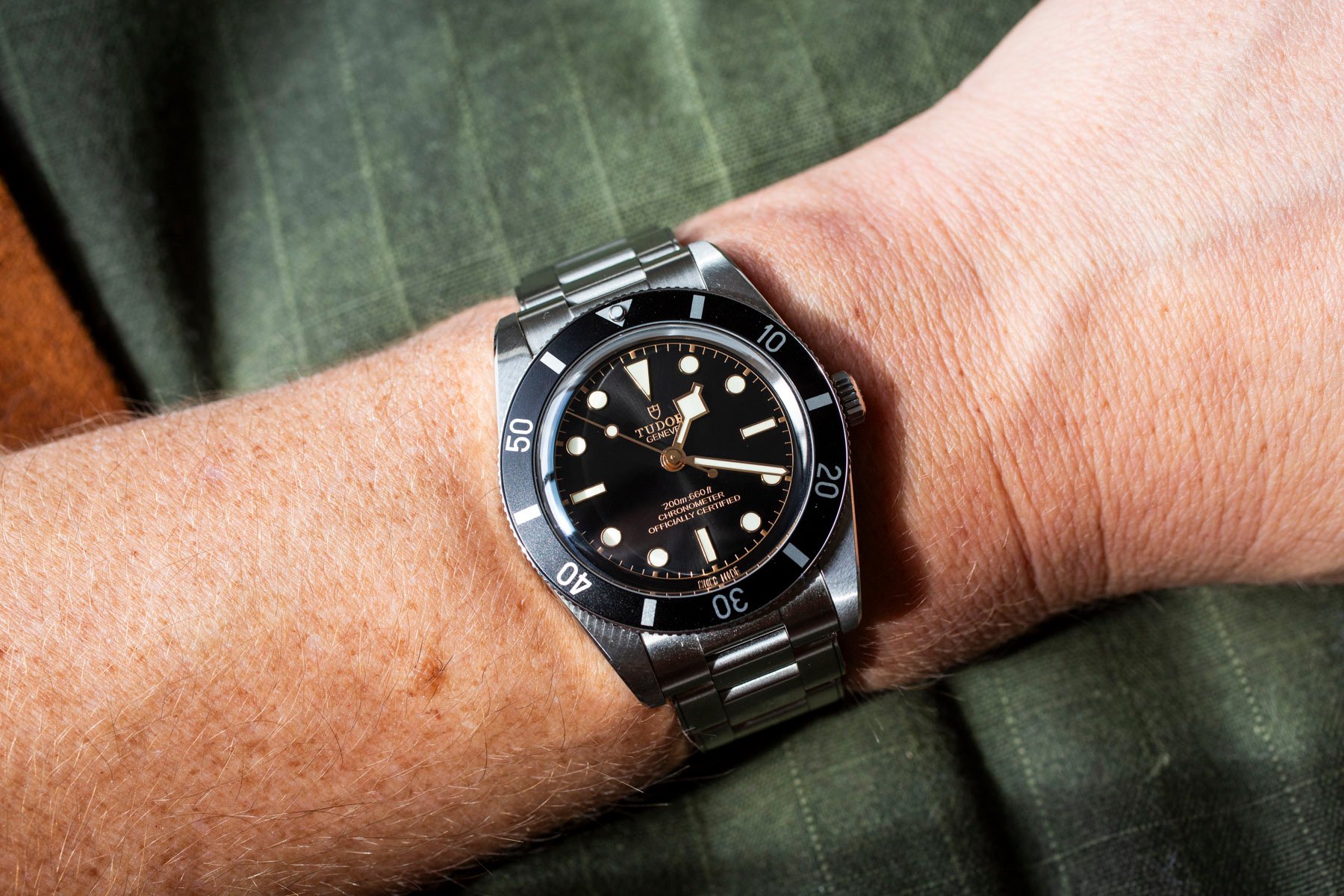
- The Tudor Black Bay 54 has a 37mm case with an 11.2mm profile and a 46mm lug-to-lug.
- The Tudor Black Bay 54 features a Kenissi COSC-certified movement with a 70-hour power reserve and 200m water resistance.
- Rolex Oyster Perpetuals are available in 34mm and 36mm sizes.
- The Rolex Explorer is available in 36mm and 40mm cases, with the 36mm version being closer to original proportions.
- IWC Mark XII was introduced in a 36mm case, followed by the 38mm Mark XV.
The Tudor Black Bay 54 takes design cues from the 1954 Oyster Prince Submariner and features modern specifications including a COSC-certified Kenissi movement, 70-hour power reserve, and 200m water resistance, demonstrating that smaller cases do not necessitat
The Rolex Oyster Perpetual's smaller 34mm and 36mm versions are presented as the design's most pure form, with clean lines and no bezel or crown guards competing for visual weight, allowing the case to read larger than its dimensions might suggest.
The 36mm Rolex Explorer, reintroduced in 2021, is considered closer to the original 1953 model's proportions, with its simple 3-6-9 dial layout working particularly well at this size, and the overall proportions feeling more resolved than the larger 40mm versi
The IWC Mark XII (36mm) and Mark XV (38mm) show that a subtle 2mm difference in case size has a genuinely subtle rather than transformative effect on wearability and legibility, questioning the benefit of incremental case size increases.
The article posits that the industry's drift towards larger cases was not always driven by function, and that smaller watches like the 37mm Black Bay 54, 36mm Explorer, or 36mm/38mm IWC pilots' watches wear comfortably and often look more resolved when designe