The ABCs of Time – A Comprehensive Guide to Chronometer Certifications and In-House Quality Seals
This article delves into the historical pursuit of precision in watchmaking, tracing the evolution from early timekeeping challenges to modern chronometer certifications and in-house quality seals. It explains the definition of a chronometer and highlights key milestones and organizations that have shaped the standards for accuracy and quality in the watch industry.
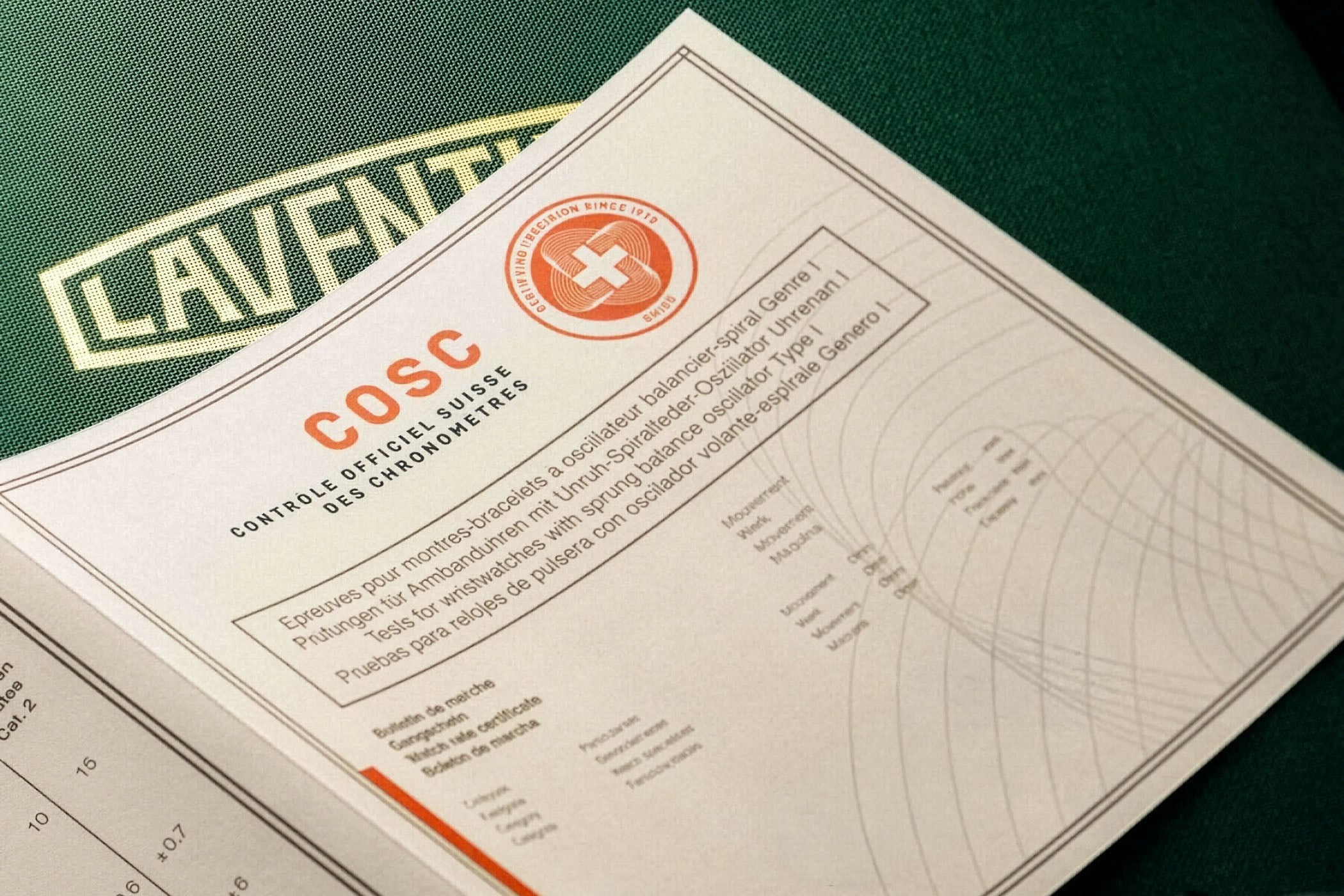
- A chronometer is a watch or movement that meets a high accuracy standard, typically -4/+6 seconds per day.
- The British Royal Observatory in Greenwich established the first official timing trials in 1766.
- The Admiralty's Annual Premium Trials, launched in 1822, were one-year accuracy tests for marine chronometers.
- Jaeger-LeCoultre's High Precision Guarantee (HPG) requires COSC certification and tests cased watches.
- Montblanc's Laboratory Test 500 Hours tests fully encased watches over 500 hours.
- The Grand Seiko Standard, established in 1966, has tighter accuracy than COSC (-3/+5 seconds per day).
Watchmakers have pursued precision since the 16th century, with significant advancements in accuracy achieved through innovations like the balance spring invented by Christiaan Huygens in 1675.
The term 'chronometer' was coined by Jeremy Thacker in 1714 to describe a custom clock designed for accurate timekeeping to determine longitude at sea.
John Harrison developed a series of four marine chronometers (H1 to H4) from 1735 to 1761, crucial for navigation.
Jaeger-LeCoultre's HPG certification includes testing for shock resistance (25G to 50G), altitude (up to 1,004 meters), temperatures (18°C to 35°C), and multiple positions.
Montblanc's Laboratory Test 500 Hours simulates a full year of wear in 500 hours, testing automatic winding, accuracy, functions, water resistance, and temperatures.
The Grand Seiko Standard tests mechanical watches in six positions and three temperatures (8°C, 23°C, and 38°C), with an enhanced 'Special' Standard offering tighter accuracy.