The ABCs of Time – The History and Evolution of Watch Clasps
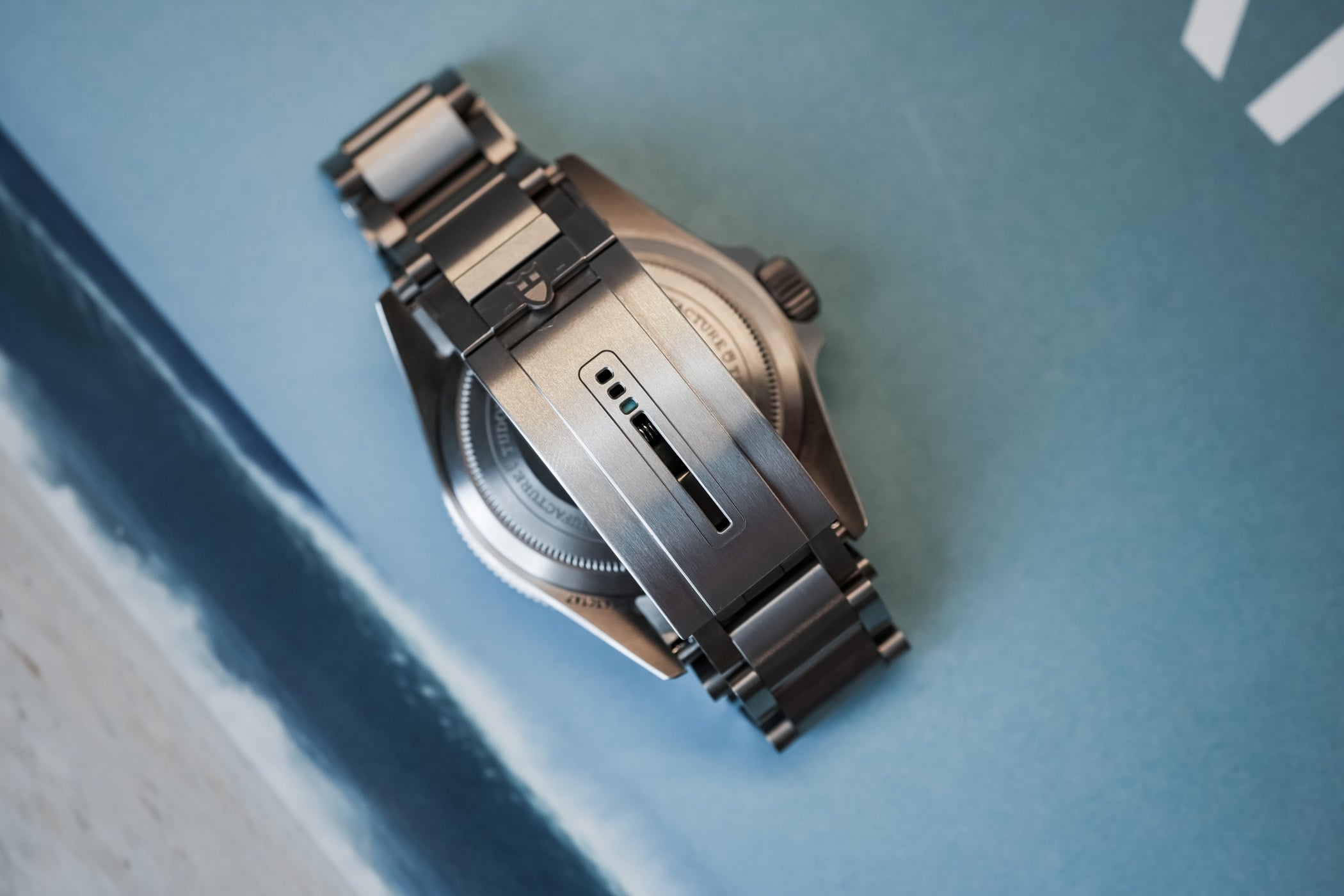
This article explores the historical development and engineering of watch clasps, moving beyond their basic function as closures to highlight their role as sophisticated components. It traces the evolution from early, non-clasp designs and simple pin buckles to modern, highly engineered deployant and butterfly clasps, many of which now incorporate micro-adjustment capabilities.
- Pin buckles, also known as tang or ardillon buckles, have origins dating back to the Bronze Age.
- The deployant clasp was invented by Louis Cartier around 1909 and debuted on the Cartier Santos in 1911.
- Sliding and hook clasps, seen on Milanese and Bonklip bracelets, offer infinite sizing options.
- Modern clasps increasingly feature on-the-fly micro-adjustments for enhanced comfort and fit.
Early metal bracelets from the 18th and 19th centuries, and expanding bracelets like Gay Frères' 'Army' bracelet from WWI, did not feature clasps.
The pin buckle, adopted from belt designs, became dominant for wristwatches by WWI, with leather straps and pin buckles becoming standard by the 1920s.
Delugs offers Fitwell Micro-Adjust Buckles, a tool-free, micro-adjustable pin buckle design with 3mm of expansion.
Louis Cartier's 'bouclé déployante' (deployant clasp) was designed to preserve leather straps by reducing stress from traditional pin buckles.
Butterfly clasps, while offering a clean aesthetic, traditionally lack micro-adjustment, though brands like Vacheron Constantin, Christopher Ward, and Formex are introducing adjustable versions.
Milanese bracelets, popularized in the 1920s, and Bonklip bracelets (patented in the late 1920s) utilize sliding clasps that allow for infinite sizing.
MB&F's HM7 Aquapod features a leaf spring deployant clasp that uses tension for a secure hold without pushers.