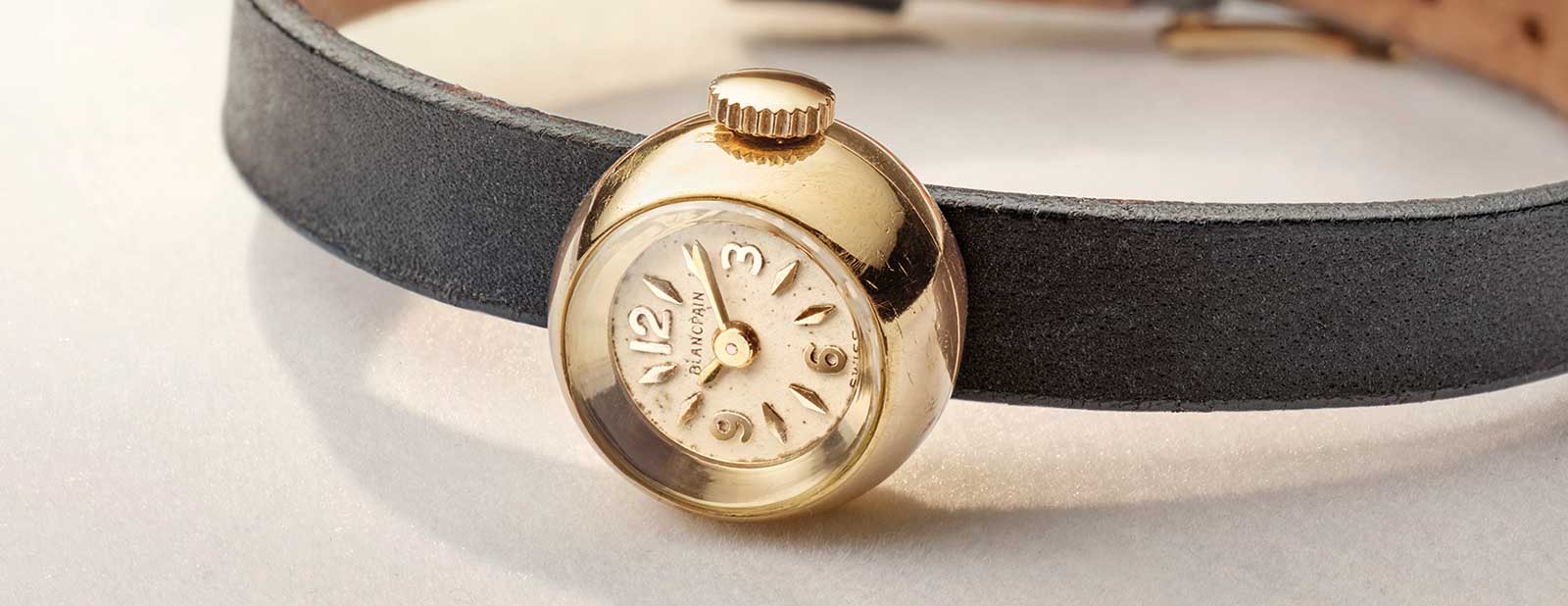
The Woman That History Forgot
This editorial highlights the overlooked contributions of Betty Fiechter to Swiss watchmaking. Fiechter, who bought Blancpain during the Great Depression, is credited with rebuilding the brand, expanding its market reach, and developing its movement production capabilities, transforming it into an industrial force. Despite her significant achievements, her role has been largely omitted from historical accounts of the industry.
Betty Fiechter and André Léal purchased Blancpain in the early 1930s, during the Great Depression, financing the acquisition with significant borrowing.
Fiechter, who had worked at Blancpain since her teens, took over the company's operations and commercial management, while Frédéric-Emile Blancpain remained in Lausanne.
After Léal's death in 1939, Fiechter managed Blancpain alone until her nephew Jean-Jacques joined her in 1950.
Under Fiechter's leadership, Blancpain (then operating as Rayville) became a major producer of movements, supplying major Swiss and American watch brands, with estimates of up to 90 percent of production consisting of movements by the late 1950s.
Rayville movements were used in watches from brands such as Omega (specifically the slender baguette Caliber R59, which became Omega Caliber 690) and Longines (under license).
Fiechter's business acumen and practical intelligence were key to her success, enabling her to navigate challenging economic times and industry shifts.
Her focus on movement production and industrial scale manufacturing, along with her acceptance of subcontracting and component supply, may have contributed to her being overlooked in historical narratives that favor independent manufacture.
Fiechter's legacy includes not only saving and rebuilding Blancpain but also significantly contributing to the broader Swiss watch industry through her movement supply business.