The Angle of the Angels
This editorial explores the historical development and theoretical arguments behind inclined tourbillons, a complication designed to improve timekeeping accuracy by averaging gravitational errors across a wider range of orientations. It references Nigel Tufnel's "goes to eleven" amplifiers from Spinal Tap as a metaphor for pushing beyond conventional limits, drawing parallels to watchmakers seeking to enhance the tourbillon's effectiveness beyond its original design for pocket watches.
The editorial uses a scene from 'This Is Spinal Tap' where amplifiers go to 'eleven' as a metaphor for pushing horological innovation beyond standard capabilities, specifically in relation to the tourbillon.
The traditional tourbillon, invented by Abraham-Louis Breguet in 1801, was designed to average gravitational errors in pocket watches primarily held in a vertical position.
A standard tourbillon does not effectively average errors when a watch is laid flat, a position where gravity acts along the balance staff, leading to potential rate differences.
The theoretical argument for an inclined tourbillon is that by tilting the balance, the oscillator spends less time at extreme vertical and horizontal positions, minimizing pronounced rate deviations caused by gravity.
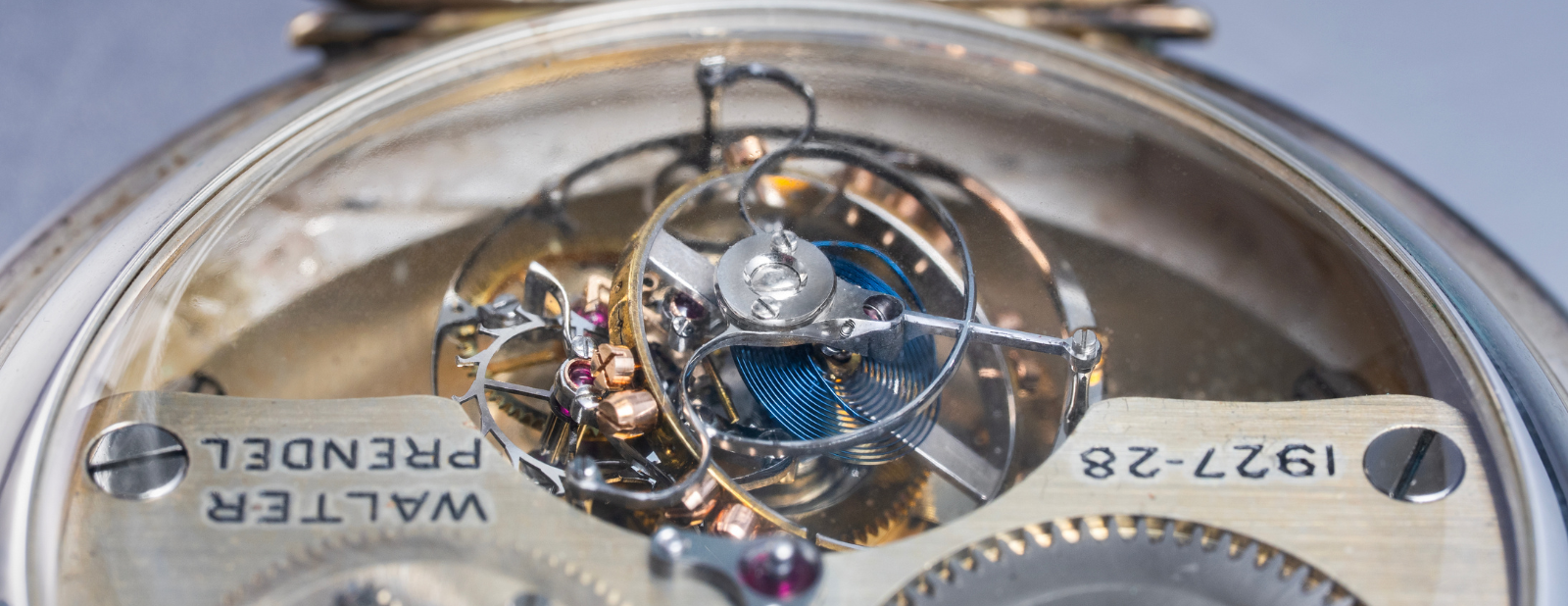
Walter Prendel is mentioned as a watchmaker who created a 6-minute tourbillon pocket watch with an inclined tourbillon.
The concept of an inclined oscillator applies equally to pocket watches and wristwatches worn on a moving arm, as the fundamental geometry of gravity's effect remains consistent.
The editorial briefly touches upon a 'Heliotourbillon' as a two-part solution, with the Duometre ensuring consistent power delivery and a three-axis inclined structure providing positional averaging.