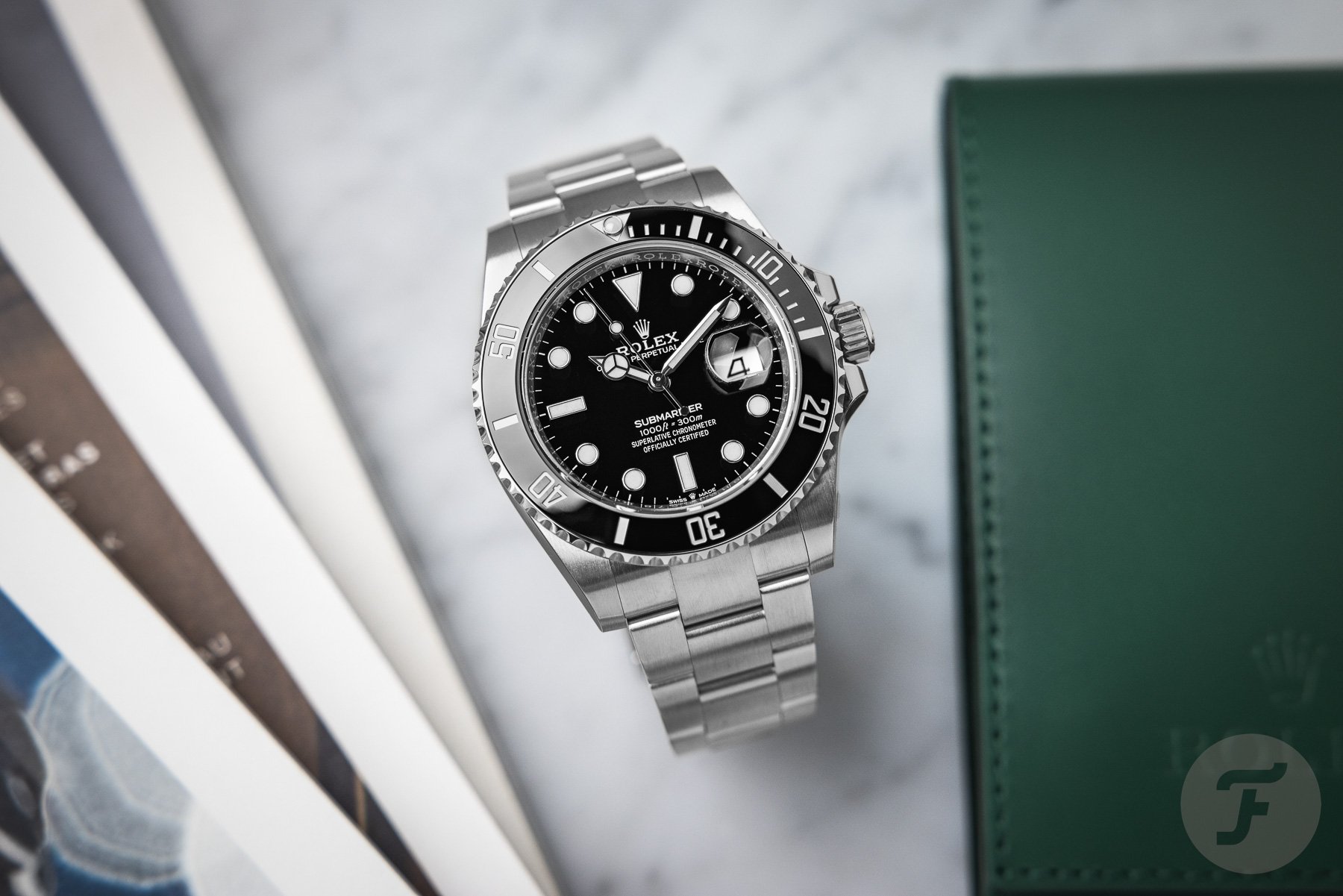
This article argues that modern Rolex bracelets are integral to the watch's design and engineering, offering superior functionality and comfort compared to aftermarket straps. It highlights the Oysterlock clasp with Glidelock and Easylink extension systems for tool-free adjustment, and the draping comfort of the Jubilee bracelet. The piece also acknowledges the enduring quality and unique comfort of older, worn-in Rolex bracelets.
Modern Rolex bracelets are presented not as an afterthought, but as a component engineered in tandem with the case and dial, influencing the watch's overall balance and feel on the wrist.
The Oysterlock clasp's security and the Glidelock extension system (offering up to 20mm on Submariners and 26mm on Sea-Dwellers) are cited as key functional advantages for tool-free adjustment in varying conditions.
The Easylink extension on the GMT-Master II clasp provides a 5mm tool-free adjustment for changing conditions.
The Jubilee bracelet's smaller, more numerous links allow it to drape and move with the wrist, offering a different kind of comfort than the Oyster bracelet.
Older riveted Oyster bracelets, despite their simpler construction and potential for rattling, are noted for their durability and the unique comfort they develop over decades of wear.
Keeping a Rolex on its original bracelet removes the decision-making process of swapping straps for different activities or environments.